Understanding Adhesive Wear in Industrial Equipment
Adhesive wear is a critical form of mechanical wear caused by direct metal-to-metal contact between moving components. It typically occurs when lubrication conditions are poor or when the lubricant film separating surfaces becomes too thin to prevent interaction.
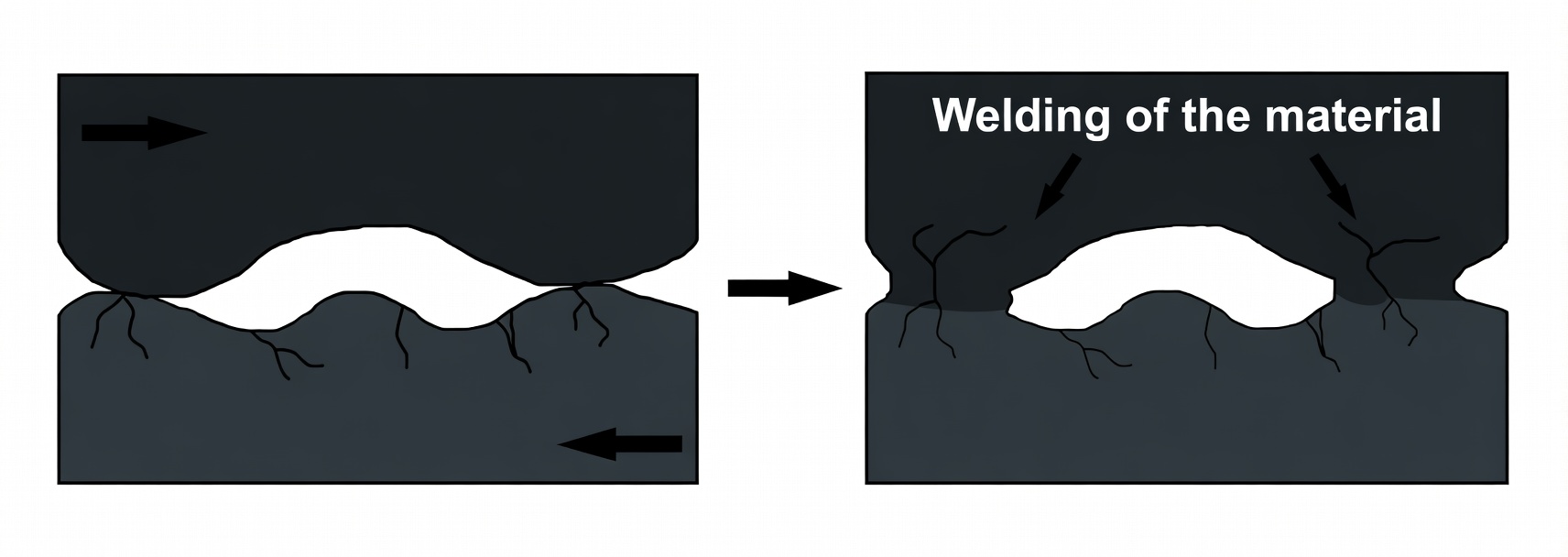
During sliding motion, microscopic surface asperities from opposing metal parts can bond together. This bonding can lead to cold welding, followed by tearing of the surfaces as motion continues. The result is material transfer, surface damage and eventual mechanical degradation.
Key Factors That Influence Adhesive Wear
Adhesive wear depends on several interacting factors:
- Surface material compatibility
- Cleanliness of contacting surfaces
- Lubricant film thickness and additive chemistry
- Mechanical load and operational speed
- Temperature and environmental conditions
When lubrication performance is compromised, friction increases dramatically and surface damage accelerates.
Typical Causes
Common operational conditions that contribute to adhesive wear include:
- High mechanical loads
- Extreme pressure conditions
- Rapid changes in load or speed
- Moisture contamination within the lubrication system
Machinery Components at Risk
Adhesive wear frequently affects critical mechanical components such as:
- Bearings
- Gear systems
- Pistons and cylinders
Failure in these components can lead to costly downtime and maintenance.
Wear Progression
Adhesive wear usually develops gradually:
- Initial stage - mild polishing and micro-damage during early equipment operation.
- Intermediate stage - visible scoring or discoloration caused by friction heat.
- Severe stage - heavy metal transfer, surface cracking and pitting.
Timely detection during the early stages is essential to avoid catastrophic damage.
Effective monitoring methods include:
- Visual inspections during maintenance
- Borescope or endoscopic inspections
- Lubricant oil analysis to track wear particles and additive depletion
These techniques help maintenance teams identify lubrication problems before major damage occurs.
Preventive Solutions
Preventing adhesive wear requires proper lubrication strategy and equipment management.
Selecting a high-performance lubricant system such as Tomoil industrial lubricants helps maintain a strong protective oil film, reducing friction and protecting components under heavy load and high-temperature conditions.
Regular maintenance, contamination control and correct lubricant selection are key factors in extending equipment service life.